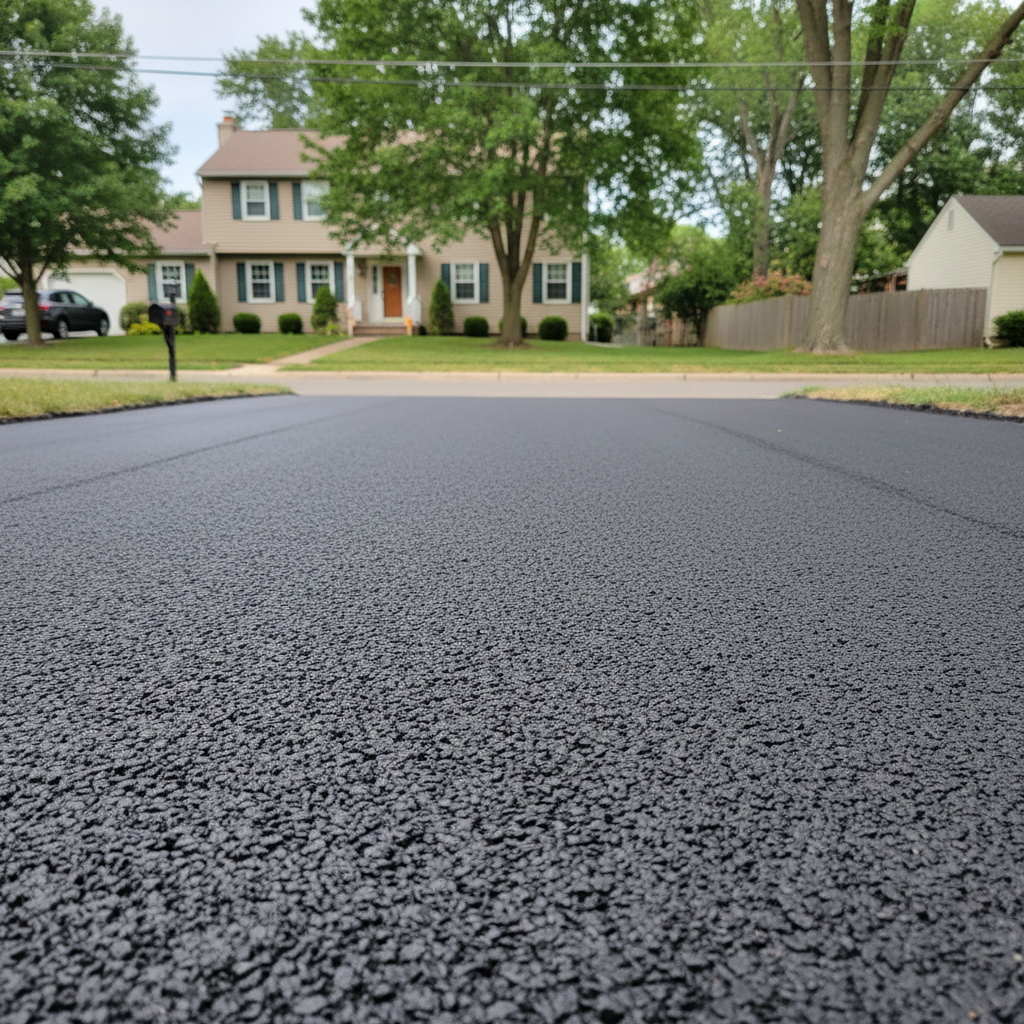
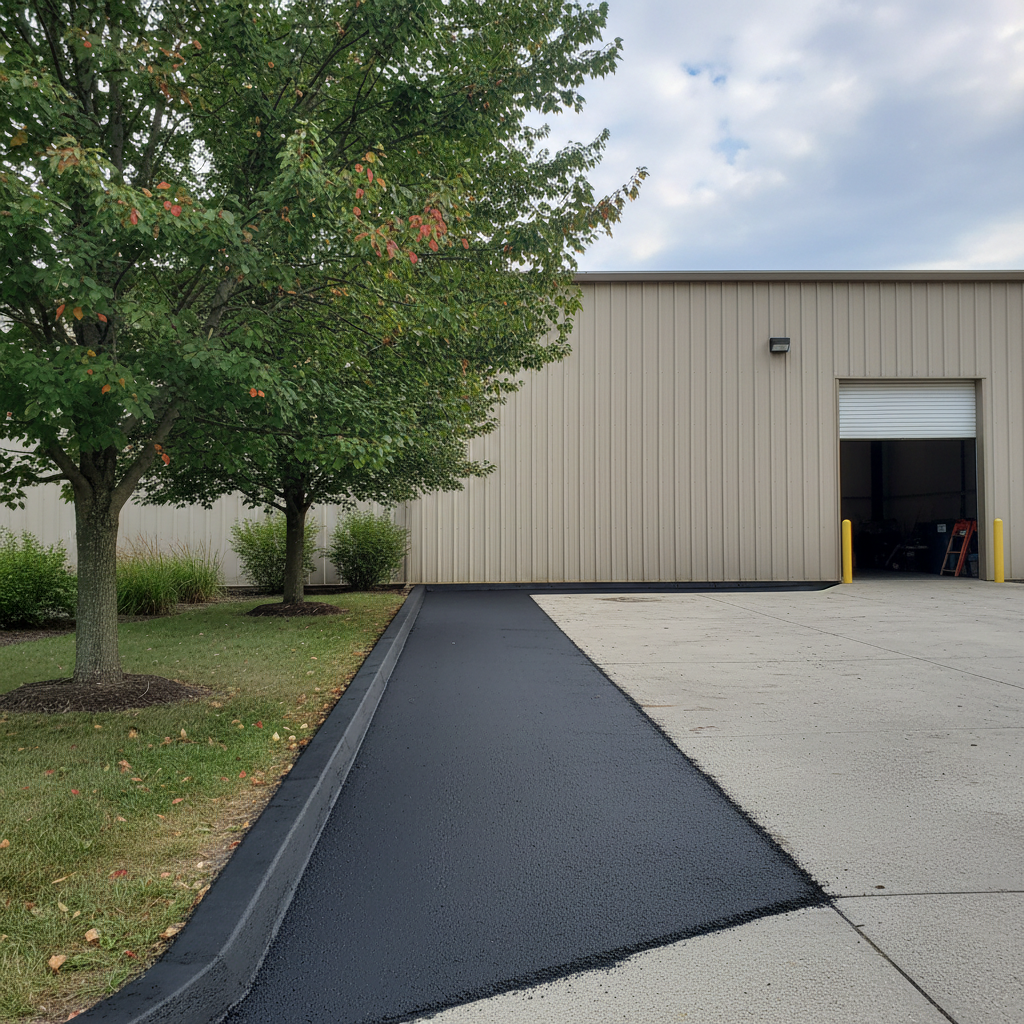
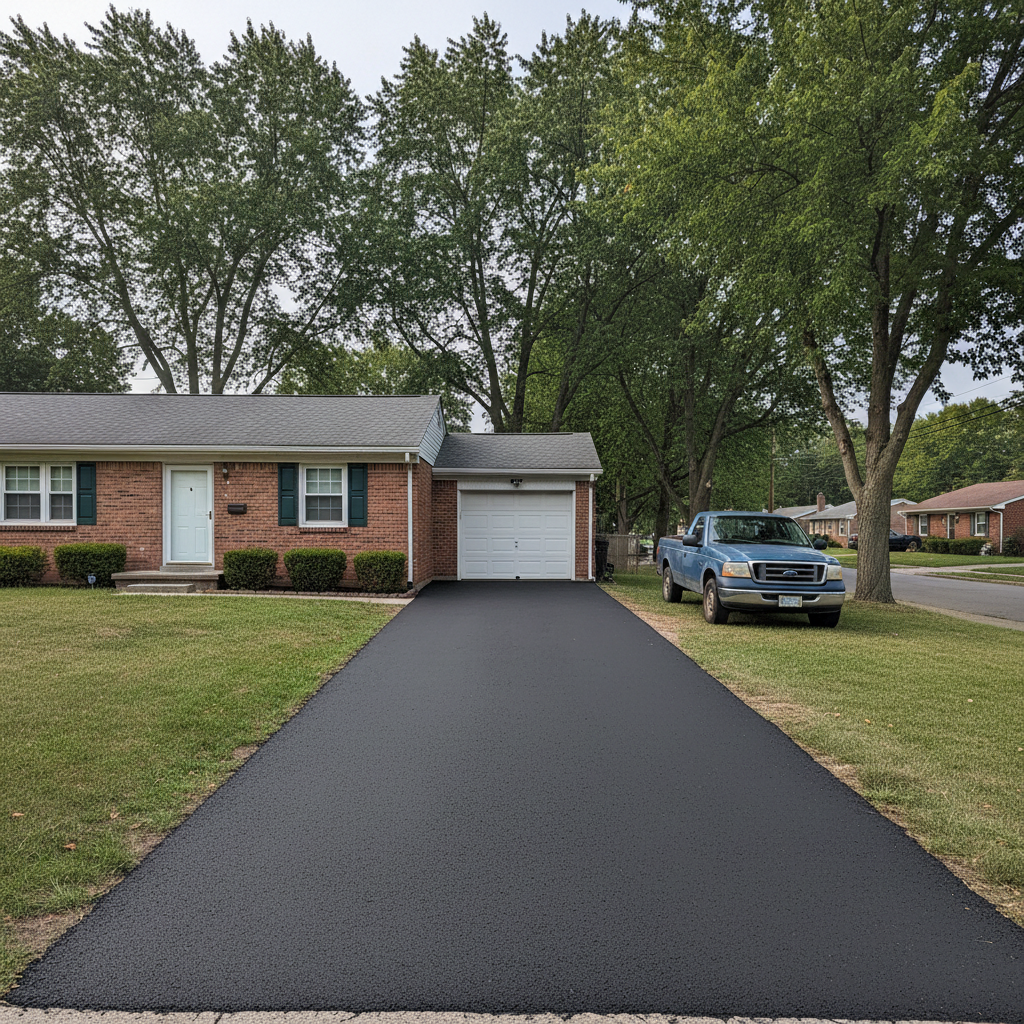
Every job below is one we do ourselves across Eastchester.
We strip out the old surface, grade the subgrade so water runs toward the street instead of pooling by your garage, and compact 4 to 6 inches of crushed stone before any asphalt goes down. Two lifts go on top of that, a binder course and a surface course, each one rolled while it's still hot. Stay off the new surface for a couple of days and keep cars off the edges for about a week while it firms up.
Commercial lots take more base than a driveway because delivery trucks and daily traffic break down a thin section fast. We build drainage slope into the grading before we pave, so water moves to the catch basins instead of sitting and eating through the surface. We can stripe the lot for parking spaces and ADA markings once the asphalt cures.
Sealcoat fills hairline cracks and blocks UV and gas from breaking down the binder in asphalt. It won't fix a structural crack or a soft spot, but on a driveway that's still sound it buys you years before you're looking at a repaving job. Most of our customers get it done every two to three years.
Cracks start as hairlines and turn into alligator patterns once water gets underneath and freezes over a Westchester winter. We rout out the crack, blow it clean, and fill it with hot rubberized sealant instead of the cheap cold pour that pops out after one freeze-thaw cycle. Caught early, this stops water from working its way down into the base.
A pothole means water already got into the base and the asphalt above it gave way under traffic. We cut the damaged section back to solid material, square the edges, and tack coat before patching so the new asphalt bonds instead of sitting loose on top. A patched pothole isn't the same as fixing the drainage that caused it, so we'll tell you if the real problem is upstream.
Resurfacing puts a fresh layer of hot asphalt over an existing surface that's worn but still structurally sound. It's faster and cheaper than tearing a driveway or lot out down to the base. If the base underneath is actually failing, resurfacing just hides the problem for a year or two, so we'll level with you about whether it's the right call.
Milling grinds off the top layer of old asphalt so a new surface can go down flush with curbs, drains and door thresholds. It's the right call when the surface is rutted or raveling but the base is still holding up. We haul the milled material off site and can lay a new binder and top course the same day when conditions allow.
Patching handles the smaller trouble spots, a sunken section by a drain, a spot where a tree root pushed up through the base, a soft area that flexes under a car. We dig out the failed section down to good subgrade instead of skimming a thin layer over the top. That's the difference between a patch that lasts and one that cracks again in a season.
Faded lines in a parking lot make a property look neglected and can create liability if handicap spaces aren't marked clearly. We restripe lots using traffic paint rated for asphalt, laid out to current spacing and ADA requirements. Usually a half-day job depending on lot size.
Before we patch anything, we figure out whether the problem is in the asphalt or in the base underneath it. Sunken spots usually mean the base washed out or never got compacted right in the first place, and patching over that just buys you another year. We'll tell you straight if a section needs to come out instead of being patched.
Four steps, and no surprises in any of them.
You tell us what you want doing, we look at what is actually there, and we ask the awkward questions early.
In writing, itemised, free. If something might add cost later we flag it now rather than at the end.
Same crew throughout. We cover your floors, keep the dust down and tidy up before we leave each day.
You point out anything you are not happy with and we fix it before the invoice, not after.
Here's the area we cover for both residential and commercial asphalt work.
Questions that come up once a project is actually underway.
Describe the problem and we will tell you what it probably is. No obligation.